
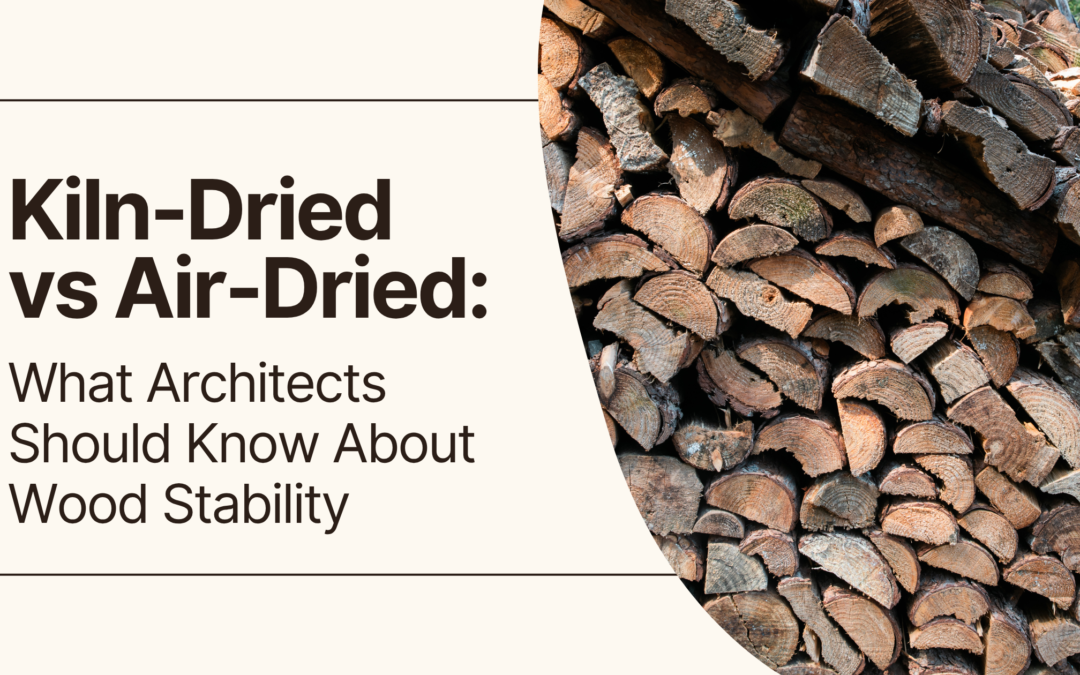
What Is the Difference Between Kiln-Dried and Air-Dried Wood?
Kiln-dried wood is lumber that has been dried in a controlled environment using heat and humidity control to reach optimal moisture content. Air-dried wood is lumber that has been naturally dried over time using ambient airflow and weather. Both affect stability, performance, and final use, especially in architectural and fine woodworking applications.
If you’re an architect, builder, designer, furniture maker, woodworker, or sustainability professional who works with wood, this is for you. Learn how drying methods affect moisture, stability, and performance, and how to choose between kiln-dried and air-dried wood.
Key Takeaways
- Kiln drying provides faster, controlled moisture reduction
- Air drying is slower but can preserve grain character
- Hybrid drying (air + kiln) combines efficiency with beauty
- Moisture content (6–8%) is critical for stability in furniture and interiors
- Vacuum and dehumidification kilns offer precision drying with fewer defects
- Kiln-dried wood is ideal for commercial builds, interiors, and LEED-certified projects
- Street Tree Revival’s approach prioritizes sustainability and high-performance results
Table of Contents
- Introduction
- Understanding Kiln-Dried Wood
- Introduction to Wood Seasoning
- Wood Moisture and Equilibrium
- Advantages of Air Drying
- Air Circulation and Drying
- Drying Stresses and Defects
- Preventing Drying Defects
- Considerations
- Kiln Drying: Modern Precision
- Types of Kilns We Use
- Why Kiln Drying Matters
- Why Wood Stability Matters
- Benefits of a Controlled Drying Process
- How to Choose the Right Method
- What We Recommend
- Build Smarter with Precision-Dried Wood
- Your Project Deserves the Best
- Frequently Asked Questions
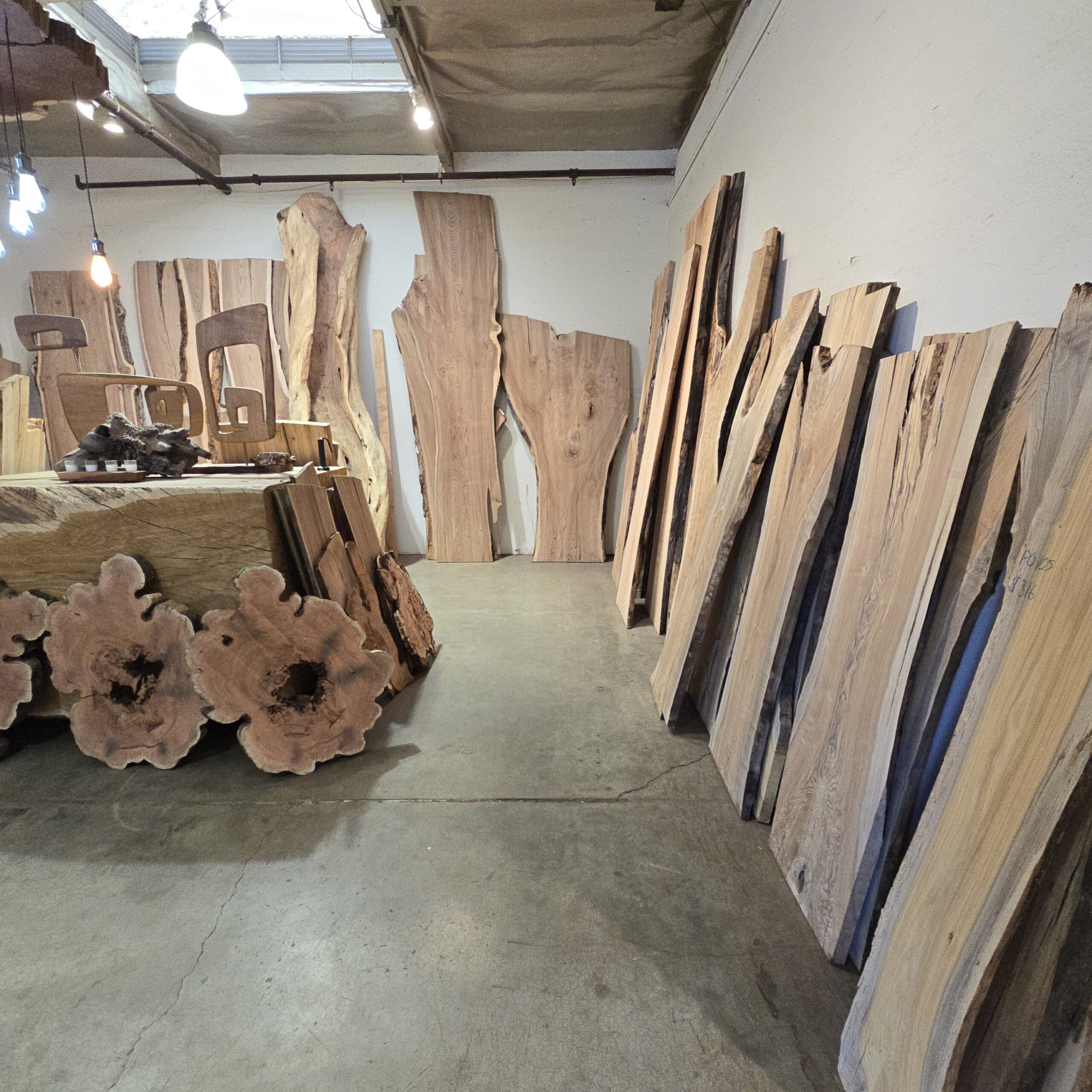
In the ever-evolving world of sustainable architecture and woodworking, choosing the right wood lumber isn’t just about aesthetics; it’s about performance, precision, and purpose. Understanding the drying wood process is essential for anyone working with wood. The method used, whether kiln drying or air drying, directly influences the moisture content, grain, final dimensions, and durability of the lumber and wood products. Properly dried wood ensures long-lasting structural integrity and beauty, which is why professionals in the industry prioritize the kiln drying process to achieve optimal results.
At Street Tree Revival, we specialize in responsibly sourced timber from salvaged logs and trees across California. Our wood production mills are designed to ensure both environmental and architectural excellence through cutting-edge kiln and air-drying technologies. We handle a variety of species, including red oak, maple, redwood, and other urban timbers, ensuring that every piece of wood meets the highest standards of quality and stability. Our commitment to producing premium kiln-dried wood means that architects and builders receive materials with superior dimensional stability and durability. The demand for kiln-dried wood continues to grow as more builders recognize its superior qualities.
Today’s architects, designers, and woodworkers rely on materials that are not only beautiful but also dimensionally stable. That’s why understanding the core differences between kiln drying and air drying can dramatically influence outcomes, reduce drying stresses, and prevent warping, cracking, or twisting after installation. Whether you choose kiln-dried lumber or air-dried lumber, knowing the benefits of each method is crucial. Using kiln-dried lumber means you are selecting a product with precise moisture control and superior stability, essential for high-performance builds and fine woodworking projects. Our kiln-dried wood undergoes rigorous quality checks to ensure consistency and performance. The reliability of kiln-dried wood makes it a preferred choice for demanding architectural applications.
Let’s explore how these methods affect the drying wood rate, moisture level, and overall performance of wood products used in everything from furniture to commercial builds. The kiln drying process plays a vital role in producing consistent, high-quality kiln-dried wood that meets architectural standards. In our kiln, every piece of wood is carefully monitored as it dries to the perfect moisture content for its intended use. Choosing kiln-dried wood ensures your project benefits from enhanced strength and longevity. Our expertise in producing kiln-dried wood guarantees materials that perform to the highest expectations.
Understanding Kiln-Dried Wood: The Modern Approach to Seasoning Wood
Air drying is the age-old method of allowing green lumber and green wood to lose moisture content through exposure to the surrounding air gradually. At our wood production mills, we begin the drying wood process by carefully stacking logs and air-dried lumber with adequate air circulation and air flow, ensuring every board has space for evaporation. This natural method relies heavily on relative humidity, weather, and temperature to draw moisture from the cell walls of the wood, allowing it to naturally reach equilibrium moisture content. Exposing timber to air is essential for facilitating moisture loss, and monitoring the water content is a key factor in the air drying process. When wood is exposed to fluctuating humidity and temperature, its moisture content can change rapidly, increasing the risk of cracks.
Although slower than kiln drying, the air drying process remains a valuable choice for architects and woodworkers seeking rich tone, less internal tension, and wood products that preserve the grain character. However, the variability of relative humidity and environmental conditions can affect the uniformity of the drying wood process. This can sometimes lead to uneven moisture distribution, resulting in drying stresses and potential cracking or warping. Sealing the end grain of timbers can help prevent cracks during air drying. As drying progresses, the outer fibers may start shrinking faster than the core, leading to internal stresses. Monitoring drying characteristics during air drying helps manage moisture loss and prevent defects.
Introduction to Wood Seasoning
Wood seasoning, often referred to as wood drying, is a fundamental step in preparing wood for use in furniture, construction, and woodworking projects. The goal of seasoning is to reduce the wood’s moisture content to a level that ensures stability, durability, and suitability for its intended application. There are two main approaches to this process: air drying and kiln drying.
Air drying is the traditional method, relying on the natural movement of outdoor air and the influence of weather to gradually lower the moisture content in wood. This process can take several months to years, as it depends on environmental factors like temperature and humidity. In contrast, kiln drying uses a controlled environment, such as a solar kiln or a vacuum kiln, to accelerate the drying process. By managing heat, airflow, and humidity, kiln drying achieves efficient and consistent results, making it the preferred choice for many modern wood production mills. Whether you’re working with reclaimed timber or freshly cut logs, understanding the differences between air drying and kiln drying is essential for producing high-quality wood products that stand the test of time.
Wood Moisture and Equilibrium
Wood is a hygroscopic material, meaning it naturally absorbs and releases moisture in response to the surrounding air. The concept of equilibrium moisture content (EMC) is central to wood drying: it’s the point at which the wood’s moisture level is balanced with the relative humidity of the environment. Achieving the correct moisture level is crucial, as wood that is too wet or too dry can lead to problems like warping, cracking, or instability in finished products.
The EMC varies depending on several factors, including the wood species, temperature, and the relative humidity of the air. For example, red oak typically reaches an EMC of about 6–8% in a dry, climate-controlled environment, but this value can be higher in more humid conditions. Understanding how different species respond to changes in humidity and temperature helps woodworkers and manufacturers ensure that their materials are properly seasoned for their specific applications, whether for fine furniture or structural timber.
Advantages of Air Drying
- Gentle on cell walls, reducing drying stresses
- Maintains color and natural surface character
- Ideal for rustic furniture, outdoor timber features, and pine species
- Low energy footprint—no heated air or electricity required
- Promotes sustainable use of trees in urban environments
Air Circulation and Drying
Effective air circulation is a key factor in the wood drying process, whether you’re using air drying or kiln drying methods. In air drying, ensuring good airflow around each board is essential to promote even moisture removal and to prevent issues like mold or fungal growth. Proper stacking, or “stickering” and spacing allow the surrounding air to move freely, carrying away moisture as the wood dries.
In kiln drying, air circulation is carefully managed using fans and vents within the kiln chamber. This controlled air flow helps maintain a consistent drying rate and ensures that all pieces of wood dry evenly. Adjusting the air flow rate and direction can significantly impact both the speed and quality of the drying process. While increasing air flow can accelerate drying, it’s important to balance this with the risk of drying defects such as cracking or warping. By optimizing air circulation, wood producers can achieve high-quality results and minimize the risk of defects in the finished product.
Drying Stresses and Defects
As wood dries, it can develop internal stresses, especially if the surface layers lose moisture more quickly than the inner core. These drying stresses can lead to a range of defects, including cracking, warping, twisting, and shrinkage. The likelihood and severity of these issues depend on the wood species, the drying method used, and the specific conditions within the kiln or drying yard.
Conventional kiln drying, which uses high temperatures and controlled humidity, can sometimes cause more pronounced drying stresses if not carefully managed. For example, if the temperature is too high or the humidity too low, the surface of the wood may dry and shrink faster than the interior, leading to surface checks or splits. Solar kilns, which use gentler heat from the sun, can reduce the risk of these stresses but may require longer drying times. Vacuum kilns are a great option as well. Vacuum kilns dry wood by combining heat, pressure changes, and often a vacuum to rapidly remove moisture. The vacuum lowers the boiling point of water, allowing it to turn into vapor at a lower temperature, while heat causes the wood’s internal moisture to evaporate. Understanding how different species respond to drying and how surface layers behave during the process is essential for preventing defects and ensuring that the wood dries evenly and maintains its structural integrity.
Preventing Drying Defects
Minimizing drying defects requires precise control over every aspect of the drying process. Using advanced equipment like dehumidification kilns and vacuum kilns can help wood producers achieve the desired moisture content while reducing the risk of issues such as cracking, warping, or uneven drying. Dehumidification kilns maintain optimal humidity and temperature levels, allowing wood to dry slowly and evenly, while vacuum kilns use reduced air pressure to speed up drying without causing surface damage.
In addition to choosing the right kiln technology, proper air circulation within the kiln and careful stacking of lumber are essential. Using stickers and spacers between boards ensures that air can flow freely, promoting uniform drying throughout the stack. By monitoring moisture content closely and adjusting temperature and humidity as needed, wood producers can consistently produce high-quality kiln-dried lumber with minimal defects. These best practices are key to delivering wood products that are stable, durable, and ready for use in any application.
Considerations
- Requires long drying times, sometimes months or a few hours short of a year
- Subject to fluctuations in relative humidity and weather
- Final moisture level may vary without proper relative humidity tracking
- Increased risk of drying defects, small cracks, and compression stresses
For best results, we combine air drying with further treatment in a kiln chamber using either a dehumidification or vacuum kiln. This ensures the correct moisture level is achieved before use in architectural projects, especially when producing high-quality kiln-dried lumber. The kiln drying process optimizes the moisture removal by controlling relative humidity, temperature, and airflow for a consistent finish.
Kiln Drying: Modern Precision for Stable Results
When time, efficiency, and exact moisture control are critical, kiln drying is the preferred method. At Street Tree Revival, our kilns are engineered to handle reclaimed wood of all species. The kiln drying process involves placing green lumber or partially air-dried lumber into a sealed kiln chamber, which acts as an oven or vacuum, providing a controlled environment for drying. Heated air, temperature, and relative humidity are carefully controlled. Using dry bulb sensors, our system regulates air circulation and adjusts the drying wood rate to avoid drying defects like warping, twisting, shrinkage, or cracking. Monitoring drying characteristics such as moisture content and stress development is essential for optimizing the kiln drying process and ensuring high-quality results. The result is premium kiln-dried lumber with consistent quality. This precise kiln drying process ensures the kiln-dried lumber meets strict dimensional and moisture content standards. Our conventional kiln setups allow us to tailor the drying wood environment to the unique needs of each species and lumber thickness.
Types of Kilns We Use
- Vacuum kiln – Gentle yet rapid drying of wood for high-value wood products.
- Dehumidification kiln – Optimized for energy-efficient drying wood process and precise relative humidity control; these kilns condense moisture from the wood into liquid water.
Each kiln type is selected based on thickness, species, and final application, with the kiln drying process tailored to the specific needs and drying characteristics of the wood. The dehumidification kiln plays a crucial role in energy-efficient drying of wood by recycling heat and maintaining precise relative humidity levels, which helps prevent drying stresses and defects.
Why Kiln Drying Matters
- Reduces moisture to 6–8% for kiln-dried lumber
- Achieves low moisture content for structural stability
- Eliminates pests through high temperature and hot air circulation
- Ensures consistency in final dimensions
Using kiln-dried lumber in your projects guarantees superior performance and longevity. After kiln drying, the wood undergoes further processing to ensure it is ready for furniture-making or other projects. The controlled kiln drying process allows for faster, more efficient drying of wood compared to traditional methods. Our kiln-dried wood operators carefully monitor each batch of lumber to ensure the wood dries to exact specifications, preserving its strength and beauty for fine furniture and woodworking.
Why Wood Stability Matters: Final Dimensions and Structural Performance
Whether you’re building high-end furniture, acoustic panels, or architectural wall cladding, the stability of your wood determines everything from aesthetics to longevity. Improper drying wood leads to unpredictable final dimensions, increased risk of warping, cracking, or twisting, and costly rework.
When wood dries, it naturally releases moisture from its cell walls, changing its thickness and structural shape. Without a properly controlled drying wood process, surface layers may dry too quickly, causing compression stresses and drying defects. The kiln drying process helps mitigate these risks by maintaining optimal relative humidity and temperature throughout the drying wood cycle. Our conventional kiln systems provide the perfect balance of heat and airflow, ensuring that the wood dries evenly and without stress. The dehumidification kiln further enhances this process by controlling relative humidity to prevent surface checking and internal stresses.
Benefits of a Controlled Drying Wood Process
- Preserves natural grain and texture
- Prevents changes in final dimensions
- Protects furniture from developing small cracks
- Avoids the distortion of wood products
- Supports dimensional accuracy in woodworking
Our hybrid method, starting with air drying and finishing with precision kiln drying, ensures you get the best of both worlds. Every piece meets its correct moisture level and is sealed properly for indoor use.
Whether you’re crafting with any type of wood, we align the drying wood characteristics of each species with a specific process that supports exceptional design integrity. Opting for kiln-dried lumber means choosing reliability and quality in every board. The kiln drying process is critical for achieving these results and is essential for fine woodworking and high-end furniture production.
How to Choose the Right Drying Wood Method for Your Project
Not all wood performs the same, and neither should your drying wood strategy. Whether you’re a designer, architect, or builder, selecting between air drying and kiln drying depends on your project’s scope, required final dimensions, timeline, and indoor vs outdoor placement. The choice of drying method may also depend on whether you are working with a raw log sourced from local tree trimmers or storm-fallen trees, or with processed timbers intended for specific woodworking projects.
Here’s a simple guide:
| Project Type | Recommended Drying Wood Method |
| Indoor furniture | Kiln drying |
| Architectural wood products | Kiln-dried lumber |
| Outdoor benches or firewood | Air drying or hybrid method |
| High-end millwork | Vacuum kiln-dried |
| Rustic decor & signage | Air drying |
What We Recommend
- Start with air drying to naturally reduce moisture content
- Finish with kiln drying to stabilize the wood and reach low moisture content
- Use a solar kiln or a dehumidification kiln for energy-efficient applications
- Target equilibrium moisture content for all furniture and interior woodworking
Still unsure? Let our team walk you through species, moisture levels, and drying wood characteristics so you can get it right the first time. Choosing kiln-dried lumber ensures your project meets professional standards, thanks to the controlled kiln drying process.
Build Smarter with Precision-Dried Reclaimed Wood
From reclaimed logs to precision-milled timber, every piece of wood at Street Tree Revival is treated with care, science, and sustainability. We don’t just dry wood; we perfect the drying wood process.
By using a hybrid method of air drying and kiln drying, we preserve the natural story of each tree while ensuring that every board reaches its correct moisture level for long-term performance.
Our kiln drying process leverages modern kilns, including a vacuum kiln and dehumidification kilns, to balance temperature, heat, humidity, and air. That’s how we protect your materials from warping, shrinking, and twisting, while retaining the unique beauty of every grain.
Choosing kiln-dried lumber means choosing a product engineered for success. The kiln drying process is at the heart of this precision, ensuring that the wood dries properly for all applications, from fine woodworking to durable furniture.
Frequently Asked Questions (FAQ)
1. What is kiln-dried wood?
Kiln-dried wood is lumber dried in a controlled environment using heat and humidity regulation to reach a stable moisture content, typically between 6–8%.
2. What is air-dried wood?
Air-dried wood is lumber that is dried naturally outdoors using ambient air and weather over a period of months or years.
3. Which is better, kiln drying or air drying?
Kiln drying is faster and more precise, offering better dimensional stability. Air drying is slower but can preserve more of the wood’s natural color and grain character.
4. What is equilibrium moisture content (EMC)?
EMC is the moisture level at which wood is in balance with the surrounding environment, a critical point for stable performance in finished products.
5. Can air-dried wood be used indoors?
It can, but it must be properly monitored or finished in a kiln to reach the low moisture content needed for indoor use to prevent movement or defects.
6. What causes wood to crack or warp during drying?
Uneven drying or rapid surface moisture loss can create internal stresses, which may lead to cracking, warping, or splitting.
7. How do vacuum kilns work?
Vacuum kilns lower the boiling point of water, allowing wood to dry faster and more evenly at lower temperatures, which helps prevent drying defects.
8. What is a dehumidification kiln?
A dehumidification kiln uses heat and moisture condensation to dry wood gently and efficiently, preserving stability while reducing energy use.
9. Is kiln-dried wood required for furniture?
Yes! Especially for indoor furniture and cabinetry, where moisture content must be consistent to prevent warping and ensure long-term durability.
10. How long does it take to kiln-dry wood?
Drying time depends on species and thickness, ranging from several days in a vacuum kiln to several weeks in a conventional kiln.
11. Can I combine air drying with kiln drying?
Yes. Hybrid drying is often the best approach: air drying first, then finishing in a kiln to reach the target moisture content and eliminate pests.
12. What wood species require special drying methods?
Dense hardwoods like red oak or maple may benefit from slower, more controlled drying to prevent internal stress. Softwoods may air-dry faster.
13. Does kiln drying kill insects and fungi?
Yes. The high temperatures in the kiln eliminate pests and fungal spores, making the wood safe and clean for interior use.
14. Can kiln drying affect the wood’s appearance?
If done improperly, it can cause discoloration. Street Tree Revival’s kiln processes are designed to preserve both beauty and performance.
15. Why is moisture content so important in woodworking?
Moisture affects wood movement. Too much or too little moisture can result in dimensional instability, surface defects, or structural issues.
Your Project Deserves the Best
Choose kiln-dried lumber and air-dried lumber from experts who understand the science behind wood drying. Whether it’s custom furniture or architectural wood products, we help you deliver long-lasting results with the stability your clients expect. Our commitment to the kiln drying process ensures every batch of kiln-dried lumber meets the highest standards. We monitor every stage of the drying wood cycle to guarantee that the wood dries evenly and without defects, perfect for quality woodworking and furniture making.
Visit us in Anaheim or Stockton, or call to speak with our team.
It’s not just about drying wood; it’s about shaping the future of sustainable design with expertly crafted kiln-dried lumber. The kiln drying process and our advanced kiln technologies make all the difference in the final product quality. Trust in our kiln-dried wood for your next project and experience the unmatched quality and performance that only expertly kiln-dried wood can provide.
Recent Comments